Dry wipes or wet wipes: what changes when you add the water yourself
A wet wipe is a recipe you inherit. A dry cotton square is cotton, and the recipe is whatever comes out of your tap. What that buys you at the changing table, what it costs, and the one habit that makes it work.
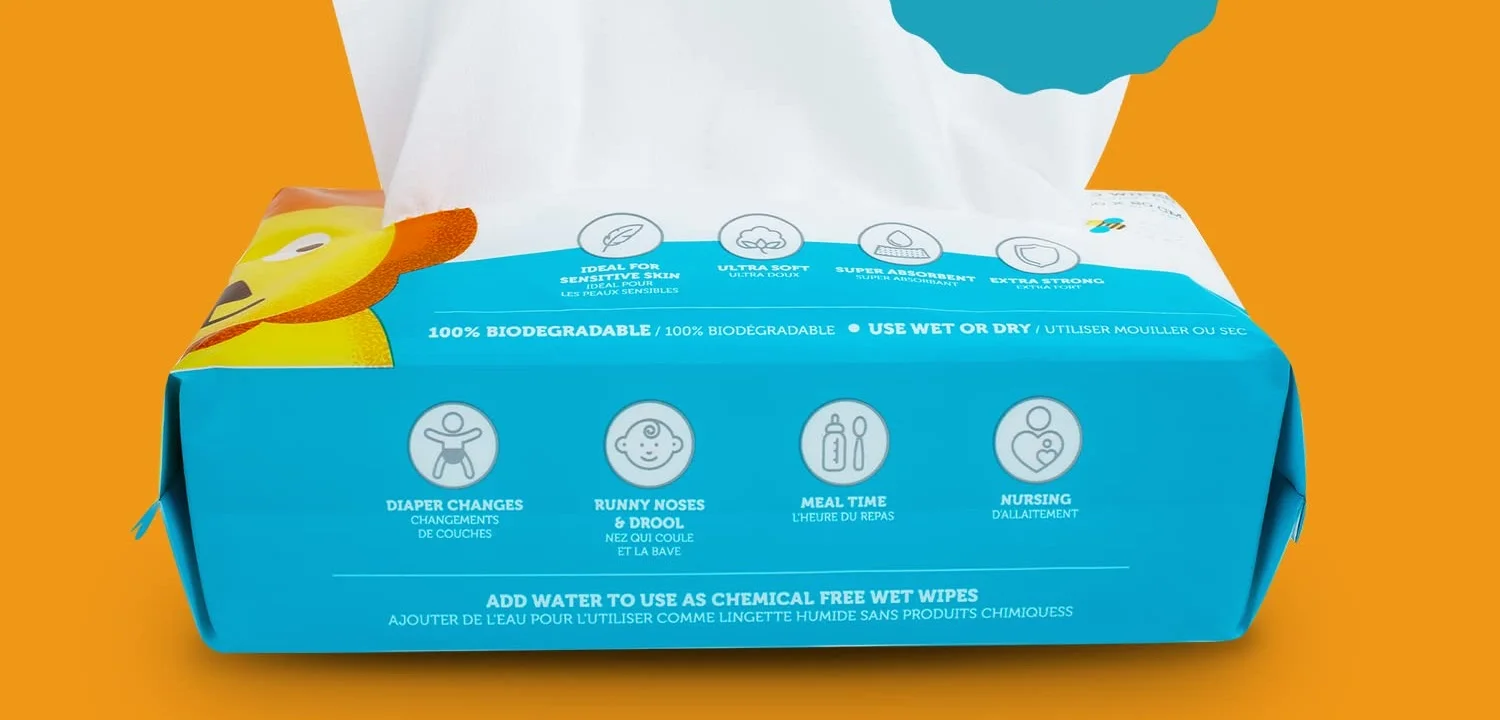
Pick up a pack of pre-moistened wipes and turn it over. The ingredient list runs to a paragraph: water first, then a humectant to keep the water in the sheet, a surfactant to lift what the water cannot, a preservative or two to stop that water growing anything between the factory and your changing table, and, on most packs, a fragrance to cover the smell of the rest. None of those lines is sinister. Every one of them is there because the wipe has to arrive wet and stay wet for eighteen months in a warehouse.
Now pick up a pack of Whoopsie Wipes. The list is one word long. The square arrives dry, and it stays dry until you decide otherwise, and the moment you decide is the moment the water goes in, from your own tap, at whatever temperature your hand tells you is right. Everything in this piece follows from that one difference. The rest is detail, and the detail is where the money and the skin are.
What the water in a wet pack has to carry
A wipe that leaves a factory wet is a small sealed pond. Ponds grow things. So the water carries a preservative, and the choice of preservative is the part of the recipe that varies most between brands and the part most often named when a child’s skin reacts. Then the water has to feel like more than water on the skin, so it carries a humectant and a surfactant; that is the reason a wet wipe feels slippery and a wet flannel does not. Then it has to smell of nothing in particular after a year in a bag, so it carries a fragrance, or a masking agent that is a fragrance under another name.
The American Academy of Pediatrics does not tell you to throw all that away. Its diaper-rash guidance asks for wipes free of alcohol and fragrance, and offers water and a gentle non-soap cleanser as the alternative, adding that water may hurt less than wiping when the skin is already irritated. That is a modest instruction and a dry cotton square sits comfortably inside it. It is water on cotton, and you choose whether there is anything else.
What you get back when you supply the water
Temperature, first. A pre-moistened wipe is the temperature of the room, and in January the room is not warm. A square held under a tap for a second is the temperature you chose, and on a newborn at two in the morning that matters more than any ingredient on any list. Then quantity. A wet wipe is as wet as the factory made it. A square is damp for a face and dripping for a bad change, and the same pack does both.
Then the choice not to wet it at all. Half of what a small child produces in a day wants lifting, not wetting: milk on a shoulder, drool on a chin, a runny nose in a cold park. Dry cotton lifts it. A wet wipe spreads a small mess into a large damp one and leaves a patch that smells of milk an hour later. A pack that is dry until you say otherwise gives you the right tool for both halves of the day, and a wet pack gives you one tool and a damp shoulder.
A wet wipe is as wet as the factory made it. A square is as wet as you made it, thirty seconds ago, with water that has never been anywhere but your tap.
The word on the pack that means nothing
Most wet packs say hypoallergenic somewhere on the front. The FDA is unusually plain about that word: there are no federal standards or definitions that govern it, it means whatever a particular company wants it to mean, and manufacturers are not required to submit any substantiation for it. Dermatologists, the FDA adds, say it has very little meaning. So when a child’s skin flares after a change and the pack says hypoallergenic, you have learned nothing about the pack.
What you can do instead is shorten the list, and this is the honest case for a dry cotton square on reactive skin. It is not that cotton cannot irritate; anything can. It is that a wet wipe gives you four or five suspects and a dry square gives you one, plus the water you chose. A fortnight on a two-pack, with the same water each time, tells you more than any word printed on a pouch. When we use the word on this site, and we do, it means exactly that: a list one word long, which you can read on the pack.
What the health services actually describe
It is worth noticing what the newborn guidance from the big public bodies does not mention. The NHS describes topping and tailing: cotton wool dipped in warm water, a fresh piece for each eye, each ear, each hand, and the nappy area washed with fresh cotton wool and warm water and dried carefully between the folds. The American Academy of Pediatrics describes a sponge bath with a damp washcloth rinsed in soap-free water, and warns that soap dries a baby’s skin. Neither says wet wipe. Neither says anything about a pouch.
A Whoopsie Wipes square is that method with the fibres bonded, so nothing is left behind in a fold. Cotton wool sheds; a cotton ball on a newborn’s bottom leaves a fluff of white in the crease that you then have to get out with a second ball. A bonded square does not, and it is eight inches across, so one square does a whole change on a newborn and folds into four clean faces on a toddler. The material the guidance names, in a shape the guidance would have named if it had thought of it.
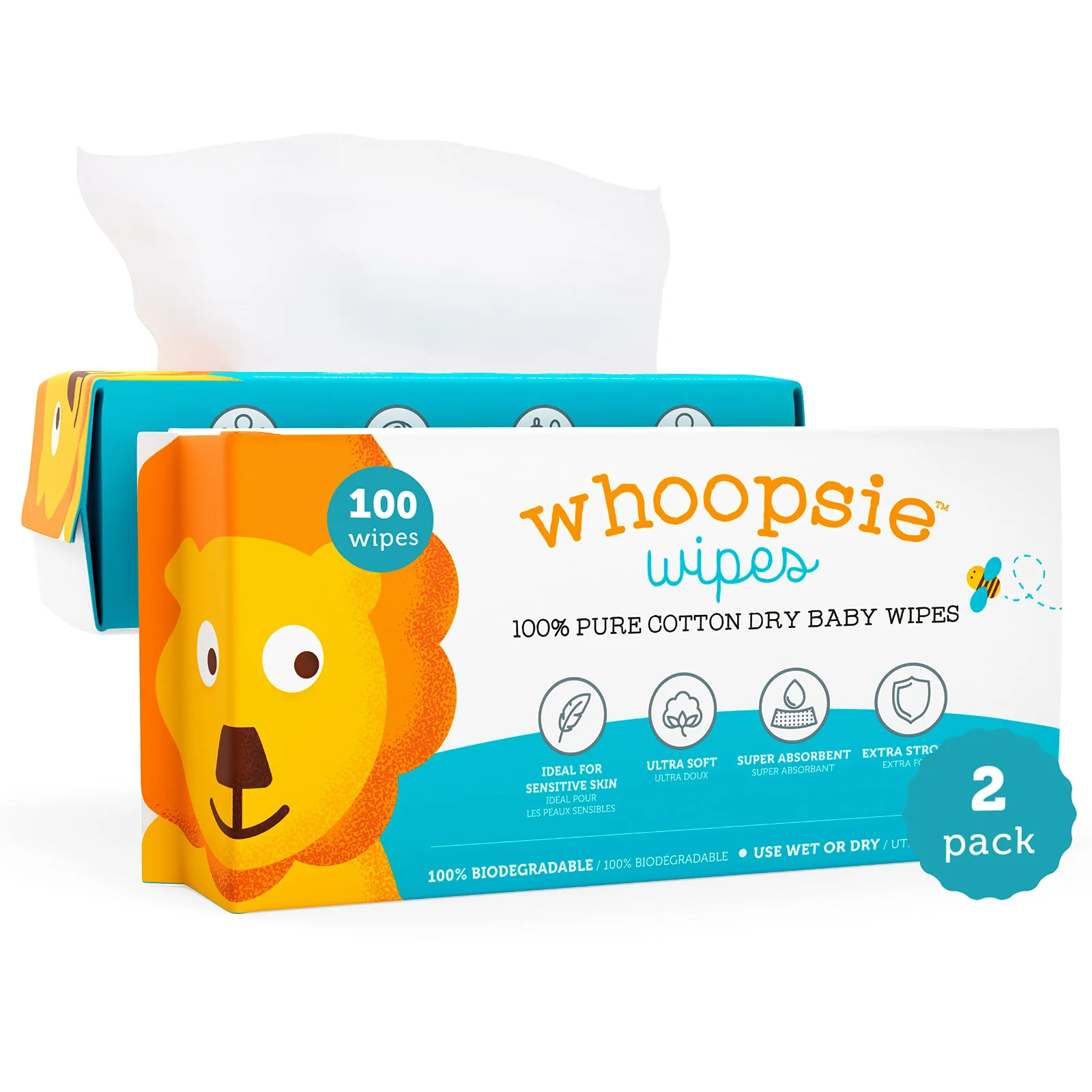
Whoopsie Wipes 200 Count
The box to try the square with: one pack at the table, one in the bag, a fortnight to watch the skin.
$19.95
The diaper bag, and the pack that cannot fail
Every parent has found the wet pack at the bottom of the bag with its seal half open and its contents dried into a block. A dry pack cannot do that, because it was never wet. It weighs a few ounces for a hundred squares, nothing in it can leak, and the last square in a pack opened a month ago is the same as the first. The water is wherever you are: a café tap, a bottle of water poured over the square, the little sink in an aeroplane toilet.
The habit that makes travel work is to wet the square before you need it. A square wetted at home and zipped into a small bag is a wet wipe for the next hour in the car. Two squares wetted at the galley tap are a change on a plane. And the dry ones do the rest of the trip without any water at all.
What it costs, said plainly
Per wipe, a dry cotton square costs more than a pre-moistened one from a big tub, and it would be dishonest to write this piece without saying so. The three boxes on this site run from about ten cents a square in the two-pack to about five in the twelve-pack, and the cards print the exact figure. A wet wipe from a bulk tub can be a fraction of that. What you are paying for is a thicker sheet that does not shred wet, a material that goes in an organic-waste bin rather than staying plastic in a landfill, and the shortest ingredient list in the aisle.
The way to make the arithmetic honest is to count what you actually use. A change on a newborn is one square wet and one dry; that is twelve a day at six changes. A face after dinner is one. Do that sum with your own household and the difference per month is a real number rather than a feeling, and for most households it is the price of a coffee or two. Some will decide that is not worth it, and that is a reasonable decision about a wipe.
The one habit
Keep a spray bottle of warm water at the changing table. That is the whole trick. A dry pack beside a spray bottle is a wet wipe two pumps away, and a dry square beside the same bottle is a dry wipe for the milk on your shoulder. People who try a dry wipe without the bottle end up at the sink at every change and give the box away; people who buy the bottle stop thinking about it inside a week.
Fill it fresh each day, because the point of supplying your own water is that it is fresh; leave it on the shelf above the table where a toddler cannot reach it; and when it runs low, the tap is right there. That is the recipe. Water, from your house, on cotton, from ours, and nothing else in between.
This page is general information about cleaning a baby’s skin, not advice about a particular child. A wipe cleans skin and does not treat it; a rash that is not getting better, blisters, oozing, unusual pain or a fever are questions for a pediatrician.
More like this is in the journal, and we at Whoopsie Wipes keeps the three boxes one click away on the front page.