How many wipes a baby actually uses: the arithmetic behind 200, 600 and 1,200
Six changes a day, two squares a change, a feed, a face after dinner. Add it up for your own household and the three boxes sort themselves; the sums are shown so you can redo them with your number.
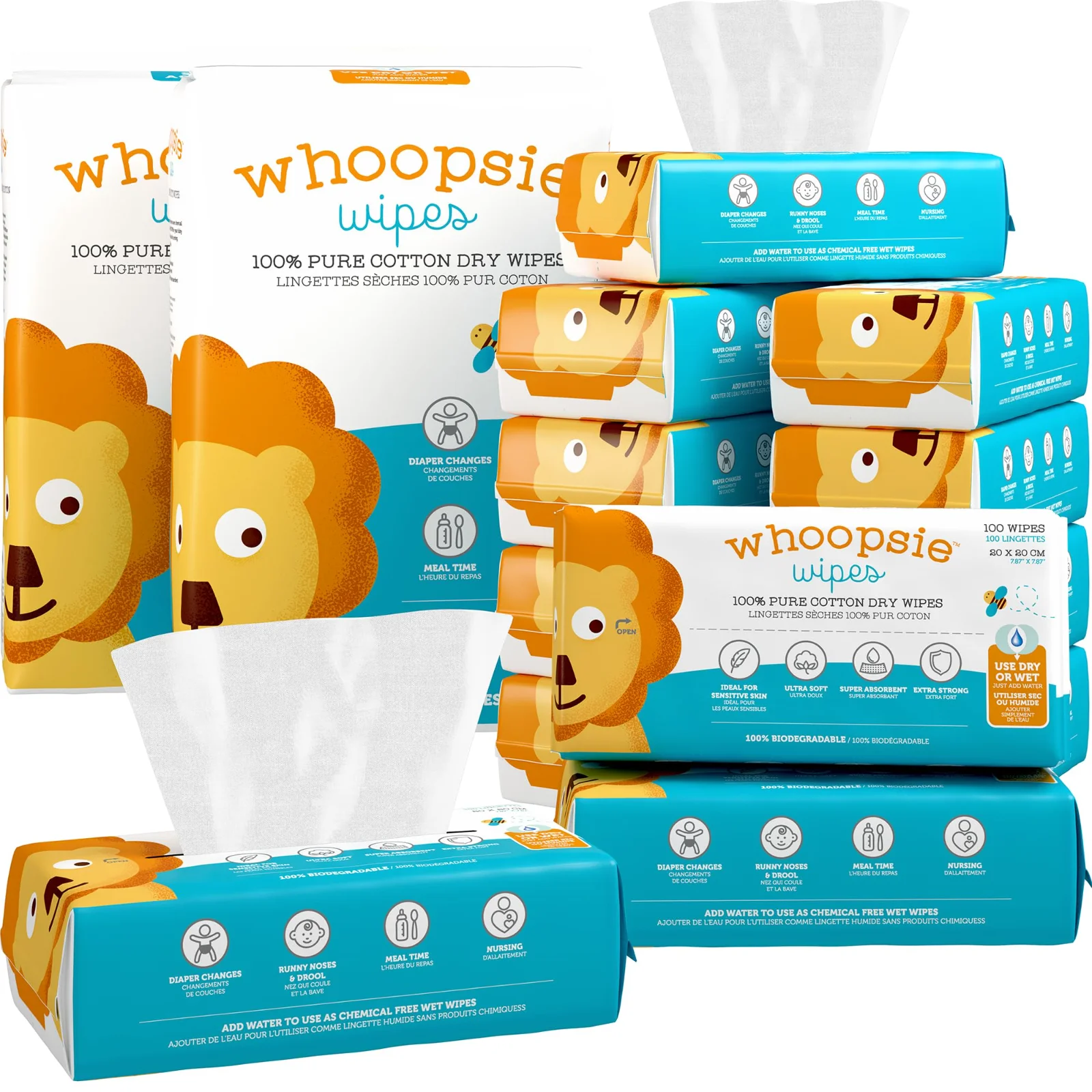
There are three boxes on this site and the only real difference between them is a number, so the question that chooses one is also a number: how many squares does your household get through in a day? Most people guess, buy the middle box, and find out. This piece does the sum instead, out loud, with the pediatric figures it rests on named, so you can put your own household in and get your own answer.
One warning before the arithmetic. The numbers below describe a household in general, and yours is particular. A baby who feeds every hour and a baby who sleeps through are both normal and use different numbers of wipes. Take the rates as a starting point and replace them with what a week of your own counting tells you.
How many changes a day
The American Academy of Pediatrics puts the range wide, because it is wide: a baby may urinate as often as every one to three hours or as infrequently as four to six times a day, and many newborns pass a stool soon after each feeding. The dermatologists ask you to change every dirty diaper, even a wet one, as soon as possible. Put those together and a young baby is somewhere between six and ten changes a day, with six as the honest floor for the sums on this site.
By the time a child is walking, three or four changes a day is ordinary, and a toddler weeks from potty training is on fewer than that. So the rate falls as the child grows, and any box you buy should be bought for the child you have now rather than the newborn you had in the spring.
How many squares a change
Two. One wet, from the spray bottle, to clean; one dry to take the water off before the cream goes on, because the dermatologists’ advice for preventing a rash is dry skin under the diaper and a wet wipe on its own leaves the skin wet. A wet change can be done with one square if you fold it and use the dry half to finish. A bad change takes three. Two is the average across a week, and it is the number this site uses everywhere.
So a young baby’s day is six changes at two squares: twelve. That is the rate printed beside the days-per-box figure on every card, and the rate the rest of this piece scales from.
The other jobs
A change is not the only thing a square does, and if you use the box for everything the count goes up. A feed is a square: a dry one for the milk on a chin and a shoulder, and eight to twelve feeds a day is eight to twelve squares. A meal, once there are meals, is two or three: a dry one for the drool, a wet one for the face and the hands, a fold of it for the tray. A face in the morning is one. A house where the grown-ups use them, for makeup at night and hands at the sink, adds a couple more.
That gives three honest households. A newborn, changes only: about 12 a day. A newborn, changes plus feeds: about 20. A toddler on three changes, three meals and a morning face: about 14. Twins in diapers: 24. Write down which one is nearest to yours, and adjust.
| Household | Changes | Feeds and meals | Squares a day |
|---|---|---|---|
| Newborn, changes only | 6 at 2 each | 0 | 12 |
| Newborn, changes and feeds | 6 at 2 each | 8 at 1 each | 20 |
| Toddler, one meal a square | 3 at 2 each | 3 meals at 2, a face at 1 | 13 |
| Twins in diapers | 12 at 2 each | 0 | 24 |
| No baby; the grown-ups | 0 | Makeup, hands, a face | 3 to 5 |
What the boxes hold, and what they cost per square
The three boxes hold 200, 600 and 1,200 squares, in packs of a hundred. At our last update they were $19.95, $36.95 and $59.95. Divide, and the two-pack is about ten cents a square, the six-pack about six, and the twelve-pack about five. The exact figures are on the cards, and they move when the prices move; the sums here are the shape of the thing rather than the number to quote at a till.
The shape is that the biggest box costs about half per square what the smallest does. That is not a trick and it is not a discount; it is a carton, a label and a delivery spread over twelve hundred squares instead of two hundred. The small box is the expensive way to buy the wipe and the cheap way to find out whether you want it, and both of those are true at once.
Whoopsie Wipes 1200 Count
Twelve packs of a hundred: about a hundred days at twelve squares a day, and the lowest price per square.
$59.95
How long each box lasts
Now the two sums meet. At twelve squares a day, the two-pack is 200 divided by 12, which is about seventeen days. The six-pack is 600 divided by 12, fifty days. The twelve-pack is 1,200 divided by 12, a hundred days. At twenty a day, the newborn who gets a square per feed, those become ten days, thirty and sixty. At twenty-four, twins, they become eight, twenty-five and fifty.
Every card on this site prints the days figure at twelve a day, and the rate beside it, so you can scale it: at double the rate, halve the days. That is the whole method, and it is deliberately simple enough to do in your head at the changing table.
| Squares a day | 200 count | 600 count | 1,200 count |
|---|---|---|---|
| 12 (one baby, changes) | about 17 days | about 50 days | about 100 days |
| 20 (one baby, changes and feeds) | 10 days | 30 days | 60 days |
| 24 (twins in diapers) | about 8 days | 25 days | 50 days |
| 5 (grown-ups only) | 40 days | 120 days | 240 days |
What it costs a day
Multiply the price per square by the squares a day and you have the honest number, the one that decides whether a dry cotton wipe is worth it to you. At twelve a day on the six-pack, six cents a square, that is about seventy-four cents a day; on the twelve-pack, about sixty. At twenty a day on the twelve-pack, about a dollar. A pre-moistened wipe from a bulk tub costs less per square, and the difference over a month is the price of a coffee or two. Some households decide that is worth it for one ingredient and a bin instead of a landfill; some decide it is not. Both are reasonable decisions about a wipe.
The box not to buy
The commonest mistake is not the wrong count but the wrong moment. A twelve-pack bought for a toddler at eight squares a day is a hundred and fifty days of wipes, and a toddler weeks from potty training will not use them on diapers. That house wants the six-pack, and then a smaller number of squares for faces and hands for the rest of the year. The other mistake is a twelve-pack for a house with nowhere to put a box a foot long: a pack you have to walk to is a pack you stop using, and the saving per square is worth nothing sealed in a hallway.
So the order is the order this site puts the boxes in. Two hundred to try. Six hundred once you know. Twelve hundred once you know and have a shelf. Count your own day first, and the rest is division.
This page is general information about cleaning a baby’s skin, not advice about a particular child. A wipe cleans skin and does not treat it; a rash that is not getting better, blisters, oozing, unusual pain or a fever are questions for a pediatrician.
More like this is in the journal, and the Whoopsie Wipes changing table keeps the three boxes one click away on the front page.